What Do You Know About Temporomandibular Joint Disorders?

People are constantly surprised to learn that their dentist is interested in more than just the condition of their teeth and gums. Dentists are a significant part of your entire team of medical professionals who work together and combine their expertise to ensure your health in their specific areas of specialization and in the areas where their interests overlap. 

Your temporomandibular joint (TMJ) connects your jawbone and your skull on either side of your head. If you place your finger just below your ear on one or both sides of your head and open and close your mouth, you’ll feel that joint at work. Thousands of Albertans experience a cluster of symptoms often called TMJ disorder. You’ll sometimes see the disorder referred to incorrectly as TMJ, which actually just identifies the joint. More correctly, the disorder is referred to as TMD, but TMJ and TMD are often used interchangeably. 

Common as TMD is, it is not particularly well understood. The goal of this article is to set out some known information about the symptoms, risk factors, and treatment options for TMD. We’ll also encourage you to involve your dentist in SW Calgary in the screening, assessment, diagnosis and treatment process if you are one of many Albertans who suffer from TMD. 

Symptoms of TMD

The most commonly reported symptom of TMD is jaw pain while using your jaw normally and doing things as common as chewing, talking and even yawning. In addition to that jaw pain, people who suffer from TMD often describe:

  • A clicking sound in their jaw or ears
  • Experiencing lockjaw or difficulty opening their jaw fully without pain, if at all
  • Ear aches and facial pain
  • Headaches and migraines
  • Swelling on the side of your face
  • A stiff and sore jaw and facial pain generally 
  • A tendency to grind your teeth as you sleep

Causes of TMD

Our understanding of what causes TMD is a bit of a mixed bag. It is clear that TMD involves impairments to the TMJ itself. What remains somewhat mysterious is what causes that impairment in the first place. Some seemingly plausible causes of TMJ impairment that produces the symptoms of TMD include: blows to the head or whiplash, arthritis in the TMJ, grinding your teeth and clenching your jaw in your sleep, some autoimmune conditions, some infections, poor posture, and even emotional stress. 

The pain you experience with TMD is usually caused by damaged cartilage in the joint, eroded or misaligned discs that separate your jaw from your skull and damage to the TMJ itself.

What are treatment options for TMD?

TMJ dentists near you use advanced neuromuscular technology to analyze the function and alignment of patients’ TMJ joint and to assess the viability and potential success of several non-surgical TMJ treatments near you. The results of those neuromuscular investigations may suggest that one or of the following treatment options may provide relief:

  • Custom orthotics
  • Custom night guards to prevent you from grinding your teeth
  • Orthodontic treatment to correct misaligned teeth
  • Minor alterations to the biting surfaces of teeth to change how and where they meet to allow your jaw to assume a neutral and stress-free position

The specially trained staff at a dental clinic in SW Calgary screen patients for symptoms and risk factors associated with TMD as well as seemingly related conditions like sleep apnea and sleep bruxism. Whenever you are experiencing any symptoms that affect or involve any part of your head, jaw, neck, throat and shoulders or that seem to interfere with your breathing or sleeping, let a dentist near you know. 

They may be able to associate those symptoms with conditions affecting your jaw and mouth and may be able to provide relief through dental treatment or in concert with other medical professionals.

7 Must-Do Tooth Care Tips for Families

Regardless of how old you are, maintaining proper oral care is a must! However, for families with small children, maintaining (or starting a routine) can be challenging. That said, we have put together a few of our top tips to ensure that your family maintains teeth that are both strong and healthy. If you find that you still need some guidance after consulting these tips, there are several options for family dentistry near you that can provide additional pointers. 

1. Maintain Your At-Home Dental Routine

It is essential to brush your teeth twice a day and floss at least once to ensure you are minimizing the chances of gum disease and tooth decay. By making this your routine, you will not only have a beautiful smile, but your children will be quick to follow your example. Showing your children that brushing their teeth can be fun will go a long way in adopting your practices. 

2. Remember Healthy Teeth Start from The Inside

From a young age, it is essential to eat a well-balanced diet. Your diet should consist of the recommended servings of grains, protein, dairy and fruits and vegetables for your age bracket. This is because calcium and protein-rich foods such as dairy products and lean meats play a vital role in preserving and regeneration of tooth enamel. It is also recommended to supplement this diet with omega-3 fats, which can be found in certain types of fish or fish oils.

Parents should also encourage your children to avoid excessive amounts of sugar food, including soft drinks. Replacing these foods with healthy alternatives is a known way to reduce the chances of tooth decay.

3. Protect Your Teeth from Injury

Both contact and non-contact sports can indeed be dangerous. If your kid participates in leisure activities with the potential for injury or has recently joined a sports team at school, a custom-fit mouthguard from a dentist near you might be necessary.

4. Learn and Be Ready to Teach Your Kids the Proper Way To Brush

There is a proper way to brush your teeth, including a combination of circular motions, back and forth strokes and placing your toothbrush at a 45-degree angle. The sooner you and your children learn these techniques, the better set up you will be for a lifetime of proper oral hygiene. 

5. Use an Appropriate Amount of Fluoride When Necessary

Fluoride is known to prove tooth enamel so much that it is often added into your water without many knowing it. If your water is not fluoridated already, you might consider reaching out to a dentist in SW Calgary to seek out their fluoride treatment recommendations. That said, for children, there is such a thing as too much fluoride. Your dentist can advise you accordingly.

6. Avoid Smoking and Encourage Your Kids To Do The Same

The bottom line is that tobacco in cigarettes can stain your teeth and increase your chance of oral diseases. For those who currently smoke, it is encouraged to try to avoid these practices and teach your kids to avoid it altogether. 

7. Visit Your Dentist Regularly

It is essential to make checkup appointments to visit a dentist near you regularly. It is recommended for children that within six months of them getting their first tooth or before their first birthday, it is necessary to book your baby's first visit to a dentist in SW Calgary. Following this initial appointment, regular checkups every six months will ensure proper tooth growth and cleaning. These intervals are recommended for those well into adulthood since, in dental cleaning, a dental hygienist will remove plaque build-up that you might not be able to clean off with your at-home dental routine.

For those looking for options for family dentistry in SW Calgary, we encourage you to visit us at Bow Trail Dental. Our dentists can also help provide tooth care tips that will ensure your family continues to build excellent oral care patterns that will support your children over a lifetime.

Reasons to Correct Your Overbite Using Invisalign

Your upper teeth should naturally overlap your lower teeth; however, when the overlapping is excessive, you have an overbite, and if you don’t correct it, it can lead to further issues.

Luckily, you don’t have to wait until the problem worsens; you may visit our orthodontics dentist in SW Calgary for options to treat your overbite!

When you think of orthodontics, you may think of metal braces. Sure, they are still in use, and they fix many dental issues; however, nowadays, patients look for more aesthetic options. Let’s talk about Invisalign in SW Calgary.

Invisalign is a system that consists of aligning your teeth using clear plastic trays. Among many benefits, the main one is that it is nearly invisible, hence its name. Invisalign is also known as adult braces since it is popular among grown adults who want to avoid wearing metallic devices.

An orthodontics dentist near you will evaluate you to determine if you qualify for Invisalign. If you do, he or she will probably instruct you to wear each set of aligners for two weeks, sometimes more or less, depending on your case.

Importance of Correcting Your Overbite

If you leave your overbite untreated, you can develop other problems, such as:

Risk of Cavities 

If you have too much of an overbite, your teeth tend to be misaligned and are tearing unnecessarily; hence, your enamel wears away, and bacteria can penetrate your teeth, creating cavities.

Periodontal Disease

As we mentioned above, when there is an overbite, bacteria attacks, and you are at risk of suffering from cavities but also gum disease. Bacteria will invade the space between the teeth and gum, creating a pocket and hurting your oral health. If untreated, the gum damage can get worse, leading to periodontal disease.

TMJ Disorder

The temporomandibular joint connects the temporal bone to your jaw. Any abnormalities within the area are called TMJ disorder. When your upper jawbone and teeth are overlapping your lower jawbone and teeth excessively, your joint has to work harder to keep a balance. The extra stress and pressure lead to headaches, clicks when opening or closing your mouth, jaw pain, and more.

Oddly Shaped Face

Often with a misaligned maxilla, your facial structure changes, making you look older. If it is your case, you can look for Invisalign near you to move your upper teeth into their right position, looking younger and prettier.

Speech Impediments

People with an overbite experience speech impediments. It can be difficult to pronounce some sounds; therefore, not only orthodontic treatment can help, but also speech therapy. A combination of treatments can be very successful in these cases.

Low Self-Esteem

Studies show that many people who have an overbite or any other dental issues have a decrease in their self-confidence. They are self-conscious of their smiles and may feel embarrassed about talking to others. Treating your overbite can also restore your self-esteem and making you feel happier and confident enough to show the world your beautiful smile.

If you made it this far, now you know that Invisalign near you can fix an overbite and even boost your self-esteem.

Thanks to modern dentistry, aesthetic orthodontics are now possible. In Bow Trail Dental we have a team of excellent dental professionals that will evaluate you and offer you a wide range of options, depending on your wants and needs.

If you have any other questions regarding this topic, feel free to contact us. Your health is the most valuable thing, so don’t postpone your free consultation and call us at your earliest convenience.

When To Call An Emergency Dentist

If only everything was routine and went as expected. That’s not true about many things in life. Surprises — good and bad — emerge constantly. Most people have a pretty good handle on how to respond to a medical emergency, like when to go to the emergency room versus calling their doctor during regular office hours. That’s not as true about dental emergencies, though.

Dentistry focuses so much on establishing regular and daily habits that we sometimes lose sight of the fact that emergencies affecting your teeth, gums, and mouth do arise. The last thing you want to be doing in case of any emergency is scrambling to know what to do. Rather than trying to figure it all out in moments of stress and anxiety, here are five situations when you should seek emergency dental care in SW Calgary. If you or a family member are ever experiencing one of these emergencies, contact an emergency dentist near you for quick support and guidance.

Broken tooth

Your teeth are made of incredibly strong material and can withstand significant pressure — but can break. Common causes of broken teeth include sporting collisions, automobile accidents, slip and falls, acts of violence, and even simply biting down on too hard an object. Those same incidents can also cause damage and injury to your gums, tongue, and the inside of your lips and cheeks. If you’ve suffered a broken tooth or damage to the inside of your mouth in any type of incident, seek emergency dental care near you. They’ll address any risk of infection, help with the immediate pain, and may even be able to save your tooth.

Unexplained or severe toothaches

Minor, fleeting, and occasional toothaches are an unfortunate fact of life. Toothaches that worsen over time rather than getting better, or that are severe rather than annoying, or that are accompanied by fever, swelling, or a bad taste or smell in your mouth are not routine. They may indicate the presence of a serious tooth infection requiring emergency treatment to prevent more serious complications.

Bleeding gums

Everyone has experienced some bleeding from your gums when brushing or flossing. An isolated incident of bleeding that stops quickly is not something to be worried about — especially if you’ve already been diagnosed with gingivitis or periodontitis and are undergoing treatment. If your unexpected and unexplained bleeding persists, re-occurs time after time, or is accompanied by any swelling or pain, you should contact an emergency dentist. Let them recommend how concerned you should be, and how quickly you should see a dentist for support.

Swollen mouth or jaw

Swelling in your mouth or jaw can indicate conditions as serious as gum disease, infections, swollen lymph nodes, and even some forms of cancer. The mere presence of swelling does not indicate the presence of those issues, but swelling warrants getting in touch with an emergency dentist right away — especially if combined with any of the other symptoms on this list — so your dentist can eliminate the biggest areas of concern.

Metallic taste in your mouth

If you have dental work in your mouth, the taste of metal can be a sign that some of that dental work is damaged or getting loose. The longer that situation persists, the more vulnerable the affected tooth is to further injury, and the greater the chance you’ll experience significant discomfort if the interior of your tooth or jaw is exposed. With time also comes an increased risk of infection due to the entry of bacteria into areas previously protected by sound dental work. Repair of dental work may not always have to be done on an emergency basis, but contact an emergency dentist near you and let them help you make that decision.

We know you don’t want to think about dental emergencies, but we also know you wouldn’t want to face a dental emergency without support. If you’re new to the area or don’t have an established dentist, get in touch with a dentist providing emergency dental care near you. You can do it before an emergency strikes, or keep the dentist’s number close at hand. But please, be in touch in any of these situations.

Types of Dental Bridges Used in Calgary


You probably know someone that has lost a tooth, or maybe that someone is you. Ideally, people would preserve their permanent teeth for good; however, even now that dental procedures are faster and simpler, many people lose one or multiple dental pieces.

Luckily, if you lose a tooth, it is not the end of the world. Sure, the ideal would be that you wouldn’t need a prosthetic procedure; however, people lose teeth for many reasons, and you should know about a dentist near you that can help you get your beautiful smile back.

Our dentist in SW Calgary will offer you a wide range of options to replace a missing tooth. Among them, there are dental implants, dentures, and dental bridges; and we will discuss the last one.

Dental Bridges in SW Calgary

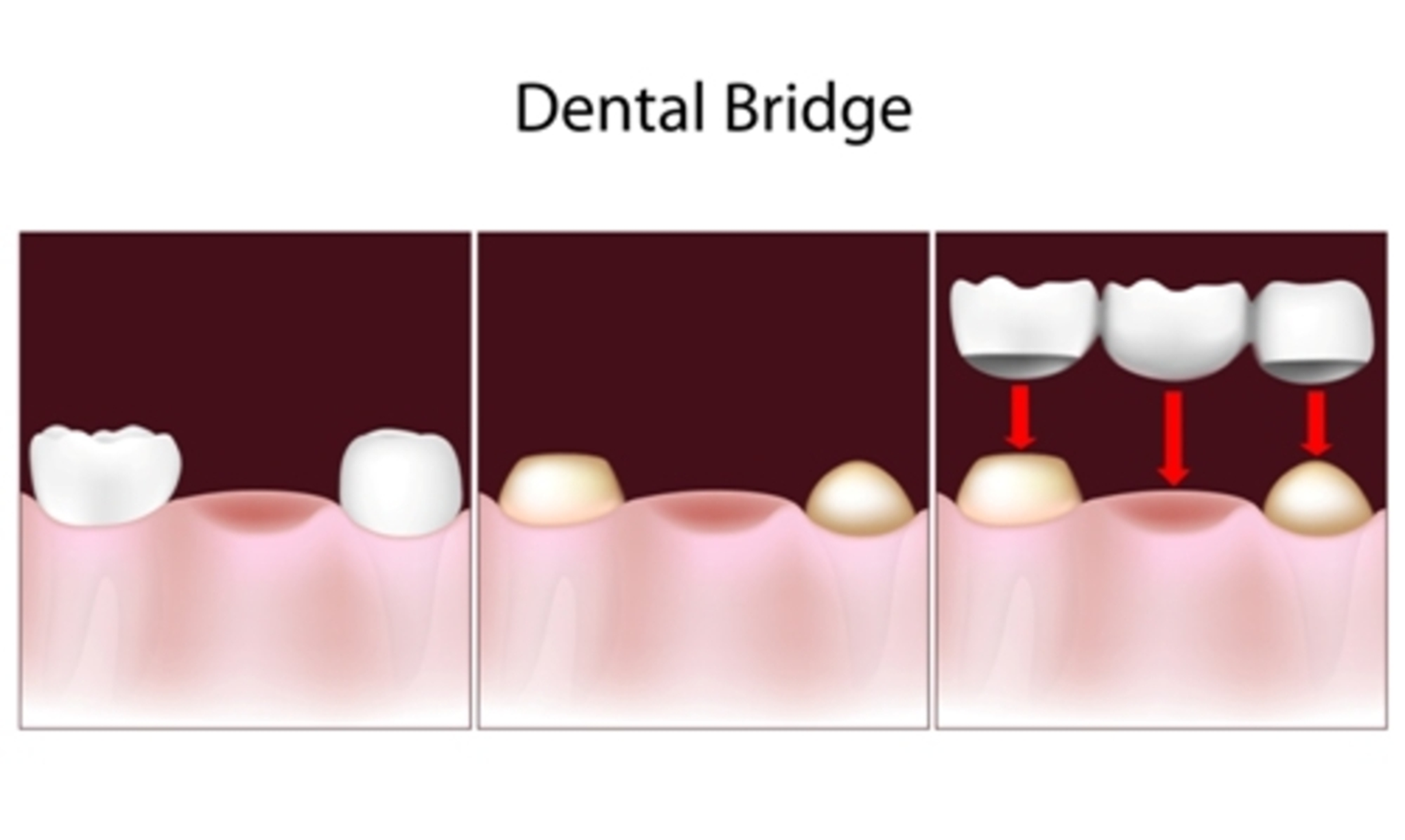
Dental bridges are fixed dental prostheses made to fill the space where one or many teeth are missing. Most common bridges consist of dental crowns and an artificial tooth (pontic) in between.

What’s the Procedure?

First of all, your dentist will take an impression of your teeth; this way, he or she will have the right measures to manufacture the prosthesis. As we mentioned above, traditional dental bridges near you consist of an artificial tooth that is called a pontic, which will take the place of the missing tooth. Unlike dental implants, there is no post supporting the pontic; hence, it will be between two dental crowns, for support. Once the dental bridge is made, your dentist will install it.

The traditional bridge is the most popular one; however, there are other types. Let’s review them.

Types of Dental Bridges

1.   Traditional Bridges

You probably know about this type of bridge since it is the most common. It is a custom-made replacement tooth that floats between two dental crowns; hence, you need to have the teeth next to the space in place; otherwise, the pontic would not have the necessary support.

2.   Cantilever

These dental bridges are designed to be held only by one dental crown; therefore, they are perfect for when the patient doesn’t have two adjacent teeth in place. On the downside, they are not as strong as traditional bridges, which have twice the support.

3.   Maryland

Like the traditional bridge, this type also uses a pontic to replace the gap of the missing tooth; however, instead of being supported by two dental crowns, it is adhered to the adjacent teeth using a metal framework. It is also called a resin-bonded fixed partial denture, and it is indicated in the replacement of a front tooth.

4.   Implant-supported

If you are missing many teeth in a row, this might be a good option for you. Your dentist will evaluate how many teeth you are missing to determine if he or she can install an implant-supported bridge. Keep in mind that dental implants need to be integrated with the bone before placing any permanent restoration above them, and this process takes months. After the bone has healed, you will have your dental bridge installed.

If you made it this far, now you know about all the types of bridges you can choose from to replace a missing tooth. Every patient is different, which is why you should schedule a consultation with a specialist to explore what option is best for you, as under any circumstance, this blog does not intend to replace a consultation appointment with your dentist.

Our team will be more than happy to advise you and offer you many options, and together, determine which one suits your wants and needs. Contact us at your earliest convenience!

Mouthguards Protect You From Teeth Grinding and Jaw Clenching


Dentists in Calgary see many patients who experience sleep bruxism — a condition where you clench your teeth and jaw, and grind your teeth as you sleep. Custom-fitted mouthguards in Calgary may solve your sleep bruxism and save you from painful and harmful symptoms.

What is sleep bruxism?

Are you one of the many people — up to eight per cent of adults — who clenches their jaw and grinds their teeth as you sleep? Dentists diagnose patients with sleep bruxism based on a collection of symptoms that they see: sensitive teeth, painful, and loose teeth;  chipped and cracked teeth; work tooth enamel; and damaged dental work. Sleep bruxism is caused by a wide range of factors that are not well-understood, but that include stress and obstructive sleep apnea.

 There are non-dental symptoms of sleep bruxism as well, including: pain in your jaw, face, and neck; headaches located near your temples that feel like ear aches; tiredness; difficulting opening and closing your jaw fully; and indications you might have chewed the inside of your cheek.

What are the dental problems associated with jaw clenching and teeth grinding?

As strong as enamel is, it is meant to withstand the forces of chewing rather than clenching. Clenching and grinding teeth as you sleep can cause cracks in perfectly healthy teeth, and even more so if the teeth are already weakened by cavities or fillings. Cracks in teeth increase the risk of cavities and tooth decay because they allow bacteria to penetrate the enamel.

 Grinding gradually wears away the enamel on the chewing surfaces of your teeth, leaving you with flattened and shorter teeth. As your enamel is worn away, the underlying dentin is exposed. Loss of enamel is unhealthy and unattractive.

 Clenching and grinding your teeth as you sleep transmits unusual forces into the gums that can cause them to recede for your teeth. As gums recede, they leave the root of your teeth exposed and increase the risk of cavities and sensitivity to heat and cold. Prolonged or significant gum recession can require gum grafting surgery.

Clenching and grinding also causes headaches and facial pain

You may clench and grind your teeth without knowing it except through the symptoms in your teeth. Other symptoms of sleep bruxism can include headaches and facial pain. If you’re experiencing headaches or facial pain in the morning without any apparent explanation, tell your dentist.

Mouthguards in Calgary can help solve the symptoms

A custom designed and fit mouthguard creates a physical barrier between your teeth. Even if you continue to clench your jaw, the surfaces of your teeth will not come into contact. The mouthguard will act to preserve the enamel, prevent cracks, and absorb some of the forces that can cause the gums to recede and contribute to headaches and facial muscle pain.

 If your sleep bruxism is caused by obstructive sleep apnea, which is often the case, a custom mouthguard can also hold your lower jaw in the correct position to make sure that your airway doesn’t close and prevent you from breathing while you sleep.

 If you have any of these symptoms of sleep bruxism, discuss them with your dentist. Your dentist will see the dental impacts of clenching and grinding at your regular appointments, but can help you solve the problems earlier if you explain what you’re experiencing even between appointments. If you’re also experiencing disturbed sleep, headaches, and facial pain, tell that to your dentist, too. A solution may be as simple and fast as a custom-made mouthguard from a dentist near you.